Girl math, Singapore edition: which sayings hold up, and which don't
Cost per wear, paying for an HDB flat with CPF, cash in a handbag and the under-$10 spends: six girl math sayings checked against Singapore's real numbers.

This week's carousel is a lighter one. It takes the "girl math" sayings everyone has heard (or said) and checks each one against a real Singapore number. I could do the arithmetic, but the jokes land better from someone who has actually made them. So I've handed this post to Jolene, who looks after new users at Sum and answers most of the questions that come into our inbox.
Over to Jolene.
Girl math, but make it Singapore

Hey, it's Jolene.
I'll say this first: I'm not above girl math. Last year I bought a pair of boots in December and told my friends they were "basically free" because I'd paid with my ang bao money from Chinese New Year. That money had been sitting in a drawer in my room for ten months. In my head it had stopped being money at all.
Before Sum, I spent a few years on a bank's customer service line. A lot of the calls weren't about anything going wrong. They were people finding out something about their own accounts they'd never been told: a fee, an interest rate, where a payment had gone. Girl math reminds me of those calls. It's usually not silly. It's a shortcut someone uses because nobody showed them the real number.
So that's what this deck does. Each slide takes one saying seriously for a moment, then puts the actual Singapore number next to it. Some of them hold up better than you'd think. One of them I'll defend forever.
Cost per wear is real maths
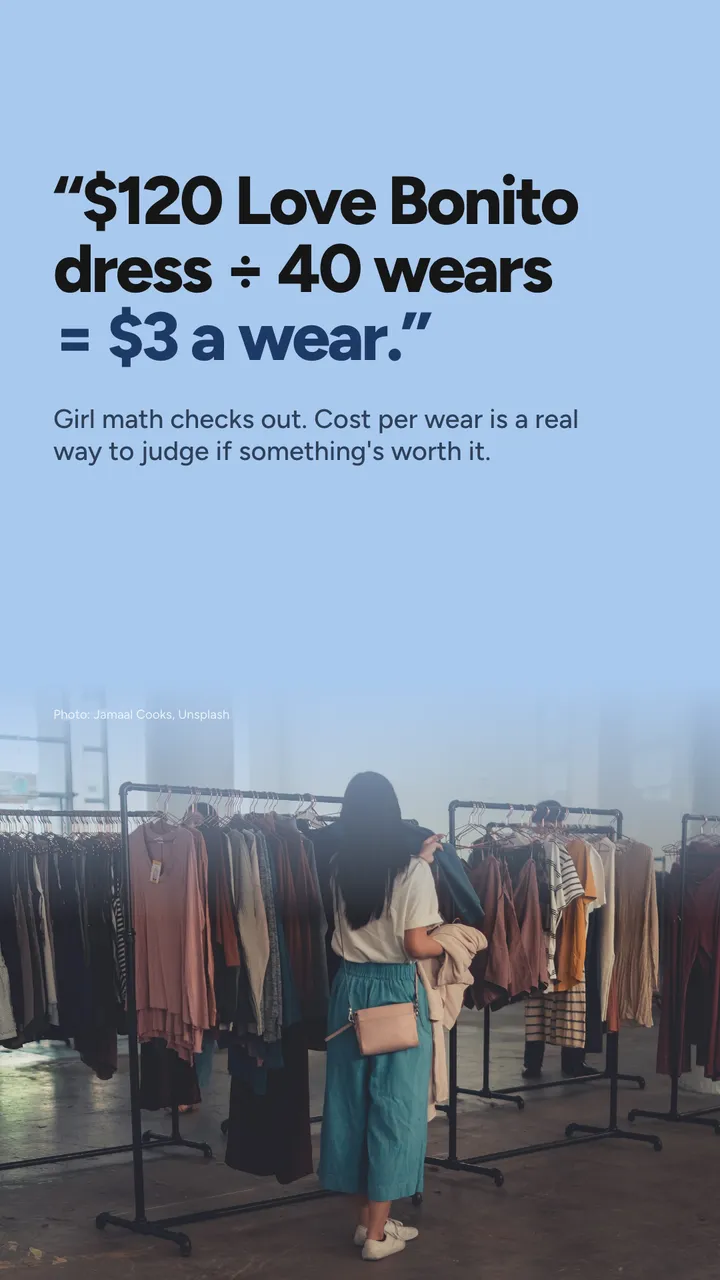
This is the one I'll defend.
Cost per wear is just the price divided by how many times you actually use the thing. A $120 dress worn 40 times works out to $3 a wear. A $30 top worn twice works out to $15 a wear. The cheaper one was the more expensive buy.
My friend Shu Ting has a black dress she wears to every wedding, every dinner and at least one office party a year. She's been wearing it for four years. I've never once heard her regret the price. I've heard her regret plenty of $25 tops she wore once for a photo.
My honest take: this isn't girl math at all. It's the same thinking a business uses when it buys equipment, spread over how long it lasts. The catch is the 40. It only works if you actually wear it 40 times.
Worth checking: before you buy, ask yourself honestly how many times you'll wear it. If the answer is "maybe three", divide by three. Which piece in your wardrobe has the lowest cost per wear?
Paying for your flat with CPF isn't free
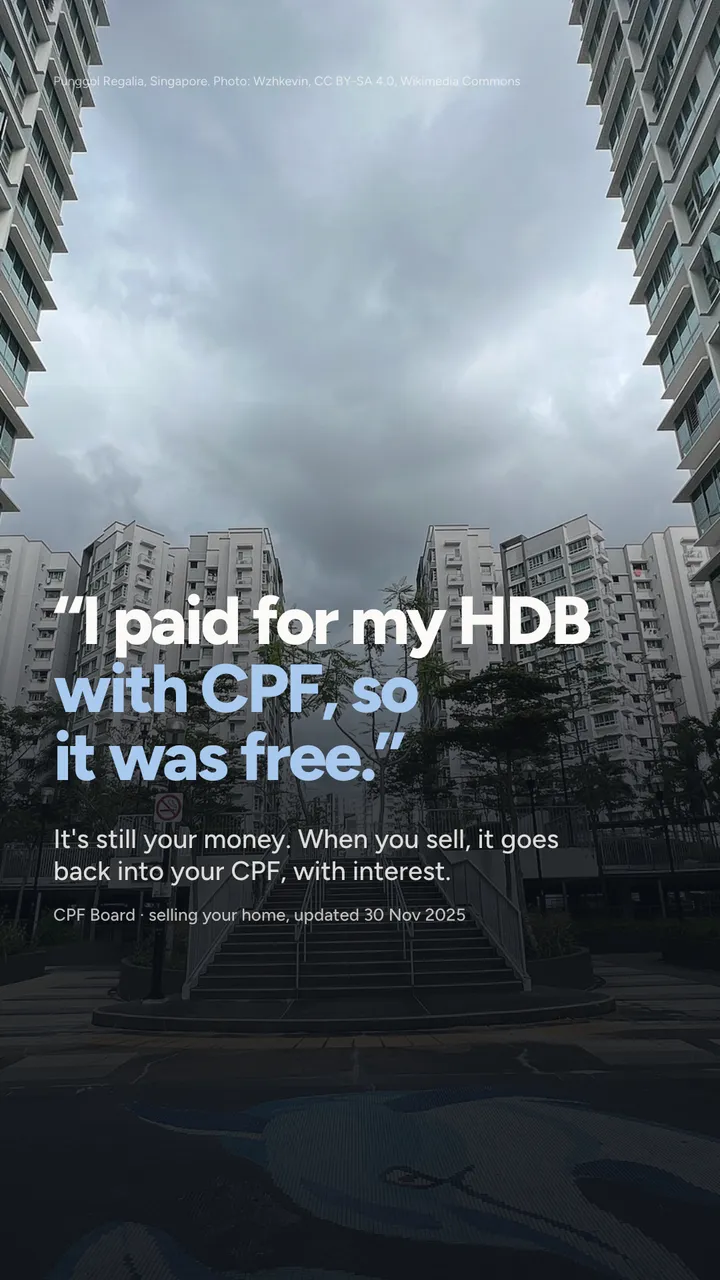
I've heard this one from friends who just collected their keys, and I get why it feels true. The monthly instalment comes out of your CPF, not your bank account. Your take-home pay doesn't change. It feels like someone else paid.
But CPF is your own money. It's part of your salary that goes into an account in your name instead of your bank. When you use it for your flat, you're spending your savings, just a different pot of them.
Here's the part most people miss. When you sell the flat, CPF Board says the CPF you used, plus the interest it would have earned if it had stayed in your account, goes back into your CPF from the sale proceeds. So the more CPF you use, the more of the sale money goes back to CPF instead of to you in cash.
My verdict: sweet, but not free. It's still a good use of CPF for a lot of people. It just isn't a gift.
Worth checking: your CPF statement shows how much you've used for your home so far, and the accrued interest. Have you ever looked at that number?
"If I don't see it, I can't spend it" is correct
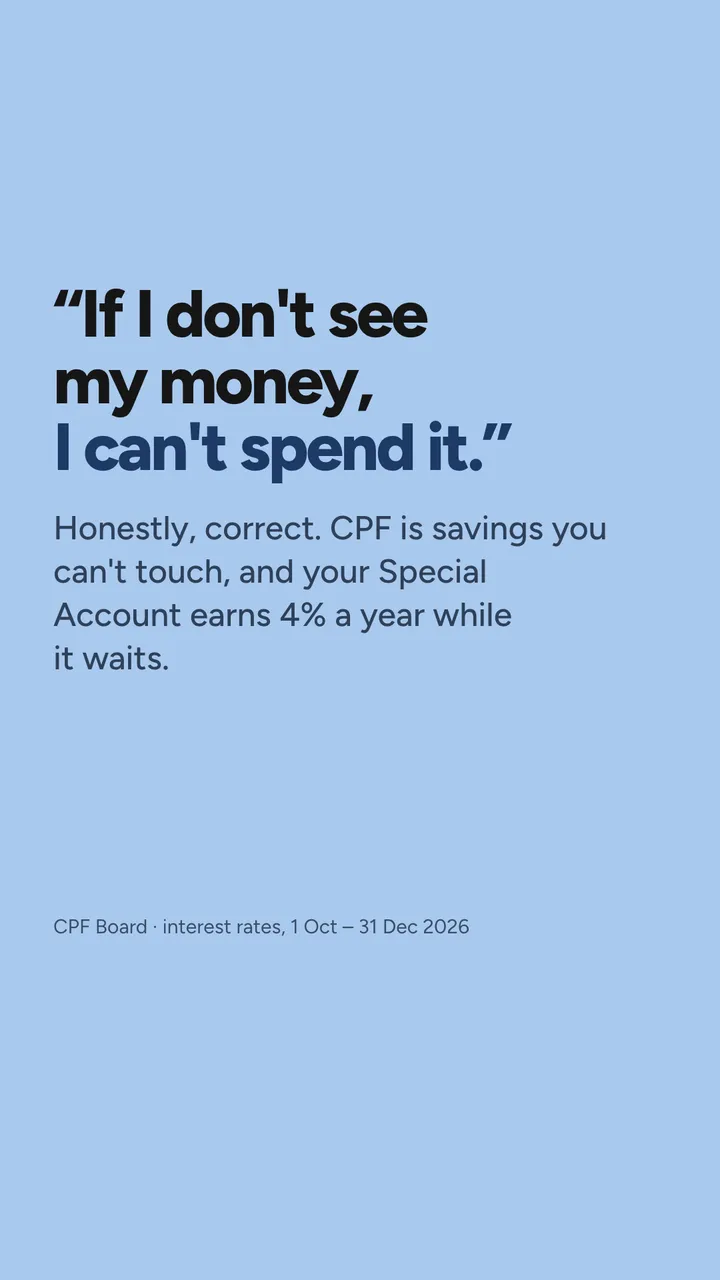
This one is girl math that accidentally describes how CPF is designed.
The money in CPF is out of reach on purpose. You can use parts of it for housing, healthcare and a few other things, but you can't spend it on a weekend in Bangkok. That's the whole point: it's saving that happens without needing willpower.
And it doesn't just sit there. CPF Board's rate for the Special Account is 4% a year for 1 October to 31 December 2026. That money is quietly earning interest while you get on with your life.
I think "out of sight, out of mind" gets a bad name. For a lot of people, me included, it's the only way saving actually works. When my savings sit in the same account I spend from, they slowly disappear. When they're somewhere I don't look every day, they stay.
Worth checking: CPF rates are set every quarter, so look at CPF Board's interest rates page for the current one. What's one bit of money you'd keep better if you couldn't see it?
Cash in a handbag is cute, and earns nothing
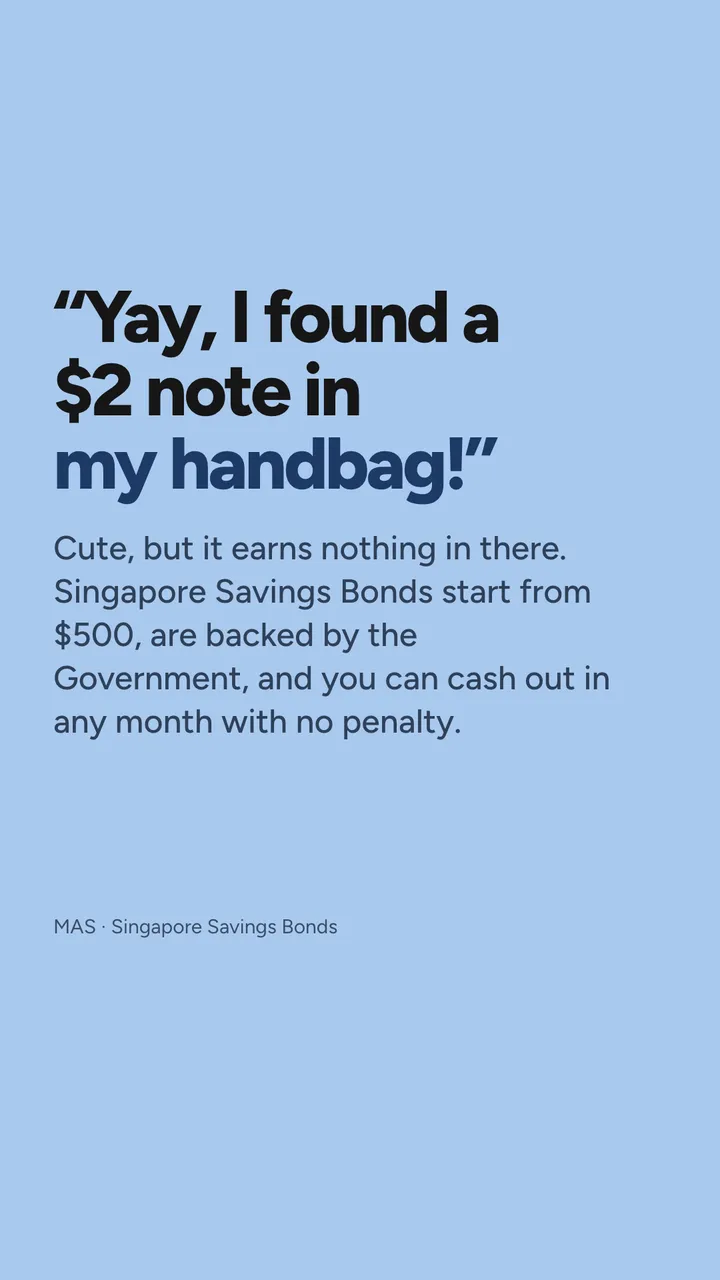
Finding money in an old bag is one of life's small joys. I'm not going to pretend otherwise.
But my December boots taught me something. That ang bao money sat in my drawer for ten months, earning exactly nothing. Cash in a handbag, a drawer or a red packet doesn't grow at all.
The slide mentions Singapore Savings Bonds, which MAS describes like this: they start from $500, they're backed by the Singapore Government, and you can get your money back in any month with no penalty. I'm not on the finance team and I won't tell you what to do with your money. But I do think a drawer is a shame when the money could at least be somewhere that pays interest.
Worth checking: how much cash is sitting around your home right now, in drawers, bags and old red packets? If you're curious about the bonds, read MAS's page on them first, and for anything bigger, a licensed financial adviser is the person to ask.
Under $10 counts
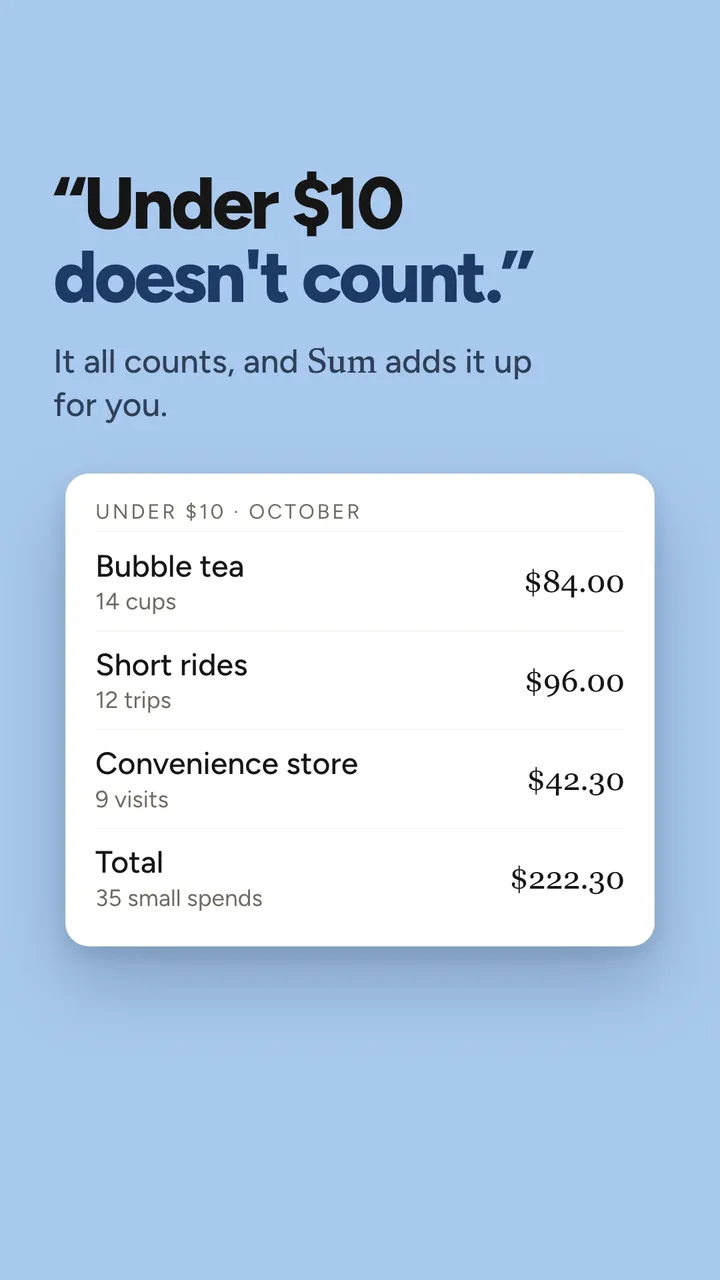
This is the one I'm most guilty of. Bubble tea after work, a short ride home when it's raining, a quick run into the convenience store. None of them feel like spending. They're under $10, so in my head they're rounding errors.
The card on the slide is sample data, but it looks a lot like a real month: 14 cups of bubble tea for $84.00, 12 short rides for $96.00, 9 convenience store visits for $42.30. That's 35 small spends and $222.30, without a single one of them feeling like a decision.
I don't think the answer is cutting all of them. A little treat is fine, and some weeks it's the thing that gets you through. My point is only that they count. Once you see the total, you can decide which ones are worth it to you.
Brandon wrote more about why small spends are so hard to notice in his post on why saving is so hard.
Worth checking: pick one small thing you buy often and count how many times you bought it last month. Which one do you think it'll be?
Manifesting works better with maths
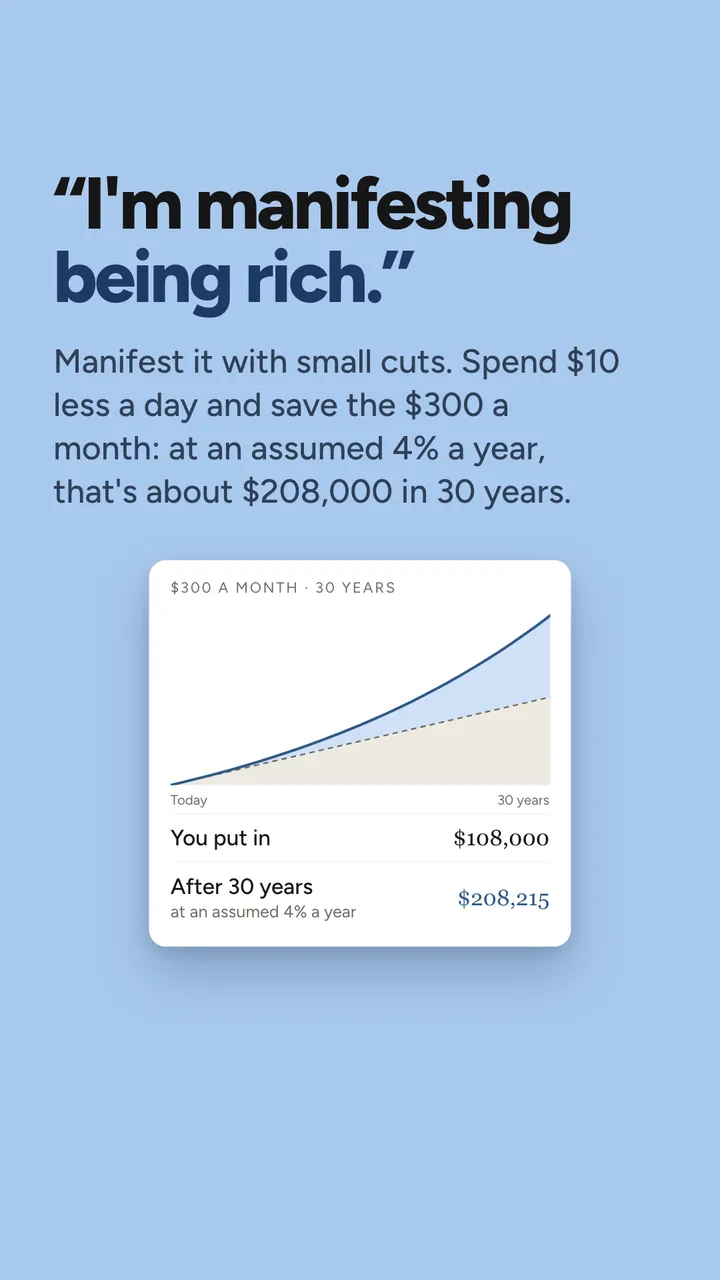
I'll be honest, I like a good vision board. But this slide puts some arithmetic behind the manifesting.
Spend $10 less a day and that's roughly $300 a month. Over 30 years, you'd put in $108,000 of your own money. The slide then assumes that money grows at 4% a year, and at the end of 30 years it comes to about $208,000. The extra $100,000 or so is interest building on interest, which is what people mean by compounding.
That 4% is an assumption for the example, not something anyone can promise you. Real returns go up and down, and some years go backwards. But the shape of the line is the point for me: small amounts, kept up for a long time, end up much bigger than they look on any one day.
Worth checking: what would $10 a day less look like for you? Not forever, just this month.
If you only remember three things
- Some girl math is real maths. Cost per wear is a genuinely useful way to decide if something is worth buying, as long as you're honest about how often you'll use it.
- CPF is your own money. Using it for your flat isn't free, and keeping savings out of sight can work in your favour.
- Small spends count. Cash in a drawer earns nothing, and under-$10 buys add up to a real number every month.
How I keep track of this
I show people the app every day, so here's how I actually use it for this.
I link a bank, or import a statement, and Sum reads it and sorts every line into a category. That's how I found my bubble tea total: it was sitting right there in my food and drink spending, with every cup counted.
Then I set a budget for the one or two categories I know I drift on, and I can see how I'm doing as the month goes. I also have a goal for the trip I take with friends every year, so every dollar I don't spend on a ride home in the rain has somewhere to go. My CPF sits in my net worth too, so I can see it next to everything else, even though I can't spend it.
Spending by category, budgets, goals and the CPF summary are all on Sum's free plan, so it's free to start. And if you'd rather not link anything, you can add your accounts by hand.
Which saying from this deck have you said this month? I'd love to know.
Jolene
Thanks, Jolene. If this post made you think of a friend, send it to her. And if you have a question it didn't answer, email me at [email protected].
Talk soon, Brandon
Try the numbers yourself

Sum is launching in Singapore soon.
Your banks, cards, CPF and HDB flat, added up into one net worth. Statements sorted, card caps tracked, bills remembered.
Brandon · Finance team, Sum
Brandon is on Sum's finance team in Singapore. Brandon reads the CPF Board, IRAS and MAS updates so you don't have to, and turns our carousels into the longer version. Questions, corrections or something to share? Email Brandon at [email protected].
Got something interesting to share?
A money story, a question, something we got wrong, or a tip other Singaporeans should hear. Reach out to me at [email protected], or leave your email and I'll write to you.
Sources: CPF Board, sales proceeds after selling your home (updated 30 Nov 2025); CPF Board, CPF interest rates (1 Oct – 31 Dec 2026); MAS, Singapore Savings Bonds.
Any app screens shown use sample data, not a real person's. Sum is free to start; some features need a paid plan.
Information only, not financial advice.